The forgotten female modernism designer master

Lily Reich was active in the design field from the 1900s to 1930s. During this period, she has worked as an exhibition designer, fashion designer, furniture designer, and architect. The achievements that she got matched by few women(Matilda, 1996).

The early twentieth century was age turbulence, the progress of new technology and thought nurtured many great modernism designers like Walter Gropius, Mies van der Rohe, and Le Corbusier. Lily Reich’s name is not as widely known in contemporary as they are. However, as an essential member of Bauhaus history, her contribution is far more significant than her reputation.

As a female designer, Lily Reich also suffers from unfair treatment in the design field like other women, especially the recognition of their accomplishments. The contemporary history of the women who work in design and the tangible cultural heritage or heritage resulting from their work remains largely unknown today, not only to the general public but also to students, scholars, and professionals. Women’s works featured in textbooks on the history of architecture, the history of building technologies and engineering, urban history or design history(Helena, 2017). Even until recently, the position of female designers was not fair. According to the statistics of Australian designers, since the 1970s, women have been making up more than 50% of graphic design graduates. Until recently, the Australian graphic design association (AGDA) had only one woman in its hall of fame, Dahl Collings.

The amount of achievement and reward is unequal between men and women. Should be attributed to the lack of female designers overall ability?  According to research on Lily Reich’s career, this view does not hold water. After the industrial embroiderer training in 1908, Lily started work as a designer at the workshop of Josef Hoffmann in Viennese. She was involved in many fields, she became a member of the Deutscher Werkbund, also a member of the independent color art group. In 1926, Reich met Ludwig Mies van der Rohe and worked closely with him(The Bauhaus, 2019). For the most part, Reich’s achievement hides under the glare of Mies van der Rohe. People often categorize a woman’s success as a result of her cooperation with Mies van der Rohe, but in a lack of research into her work, it is very irresponsible. As is already well known, the renowned Representative Pavilion and also the German Electrical Industries Pavilion are both designed by Ludwig Mies van der Rohe. However, what it is less known is that  Reich and Mies had been in charge of developing the German sections in parts of the interiors of eight separate neoclassical palaces: the Southern Palace on the top of the mountain to display Germany industries in the fairgrounds of Montijüic. Reich and Mies design a wide range of furniture that has been designed to showcase a wide range of industrial products from compounds and visual objects to books and graphic arts. The official catalog includes a full-page AD for the “Lilly Reich Weave” steel tube MR 10 chair, as Smith goes to great lengths to promote his furniture in what appears to be a promising new market(Laura, 2017). The contribution of Lily Reich and Mies van der Rohe were on a par. However, the recorder is more inclined to give credit to Mies for this event. A similar situation occurred in the design of the Barcelona chair; this world-famous chair was also designed in collaboration with Reich and Mies. However, in most teaching texts, Reich is not named. Reich’s relationship with the chair would not have been known to the public without further investigation.

The unfair treatment of female designers is diverse.  For example, there were some great female designers like Reich who have been able to shine during their careers. But it is despised by the chroniclers of history. Nowadays, there are a large number of female designers entering the workforce today, but it is difficult to advance to influential positions. Sometimes it’s just that companies are biased against women like childbirth and maternity leave. These stubborn prejudices make us lose too much information in design education, and a large number of students may not learn the complete history of design.

Reference

Laura Martinez de Guereñu. 2017. MoMoWo: Women Designers, Craftswomen, Architects and Engineers between 1918 and 1945. (Art and Culture, History, Antiquity Press,2017), pp 250-256.

Helena Seražin. 2017. MoMoWo: Women Designers, Craftswomen, Architects and Engineers between 1918 and 1945. (Art and Culture, History, Antiquity Press,2017)

Jane Connory. 2017. Plotting the Historical Pipeline of Women in Graphic Design, (Design History Australia Research Network Press, 2017)

Matilda McQuaid, 1996. Lilly Reich and the Art of Exhibition Design. ( the museum of modern art Press,1996) pp 13-15

Bauhaus100.com

Accessed 10/4/2019

https://www.bauhaus100.com/the-bauhaus/people/masters-and-teachers/lilly-reich/

Lily Reich, Moma

Accessed 10/4/2019
https://www.moma.org/artists/8059

The Potential of Australian indigenous Design

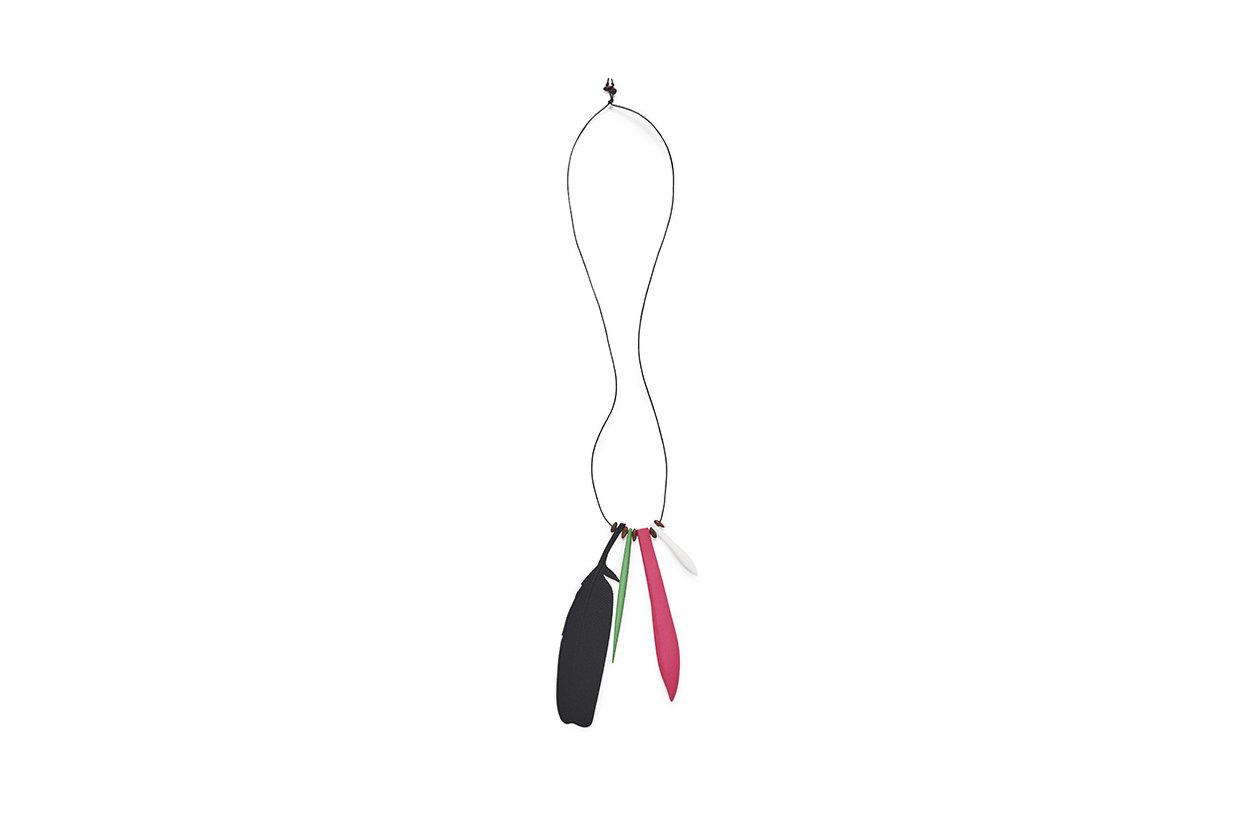
Figure 1. Maree Clarke, Necklace Crow feather, Green Quill, large pink tooth.
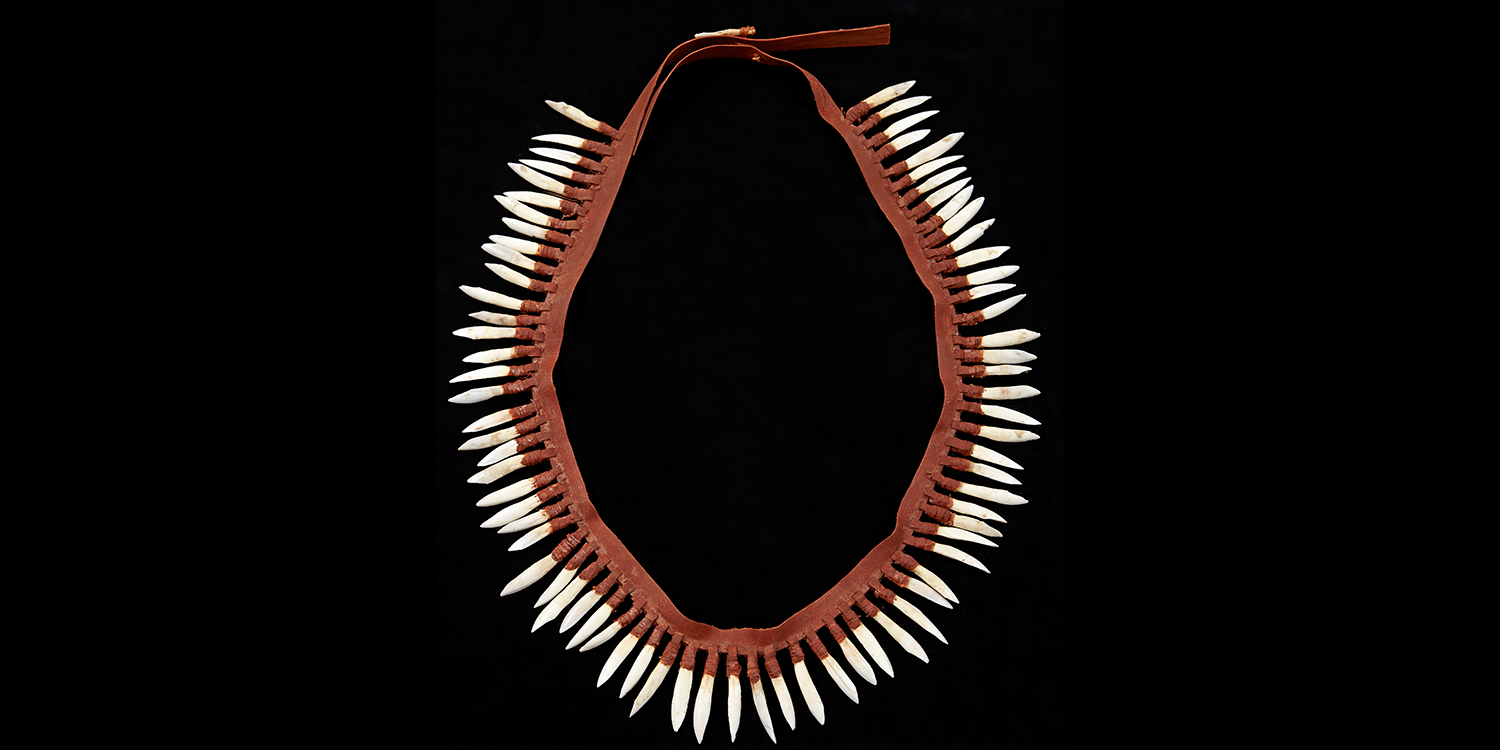
Figure 2. Maree Clarke, Thung-ung Coorang, (Kangaroo teeth necklace).

Maree Clarke is an aboriginal female designer of Australian. She has a cultural background from Mutti Mutti/Yorta Yorta and  Boom Wurrung/Wemba Wemba. Her design work is enhanced by new technologies, ensuring that her practice is contemporary and current, and the next step in the continuum that is the oldest living culture in the world(MUMA page, 2019). Meditation on the relationship between tradition and modernity is a central element of Maree’s oeuvre(MUMA page, 2019).

Her latest design work, shown in figure 1, is a collection of Jewelry that comes in gold plating, supersizing and 3d printed forms, they are shaped into the types of kangaroo teeth, quills, and feathers. Using organic material from animals for decoration is often seen as archaic and primitive. However, in this design, Maree Clarke endows cool color and texture for these natural forms. With these compositions, these animal body shapes illustrate concise and beautiful of contemporary jewelry design. In general, this work still communicates a traditional cultural practice. You can feel it is a design that passes on from an ancient ethnic in a form more acceptable to modern humans.

It is interesting that we can see an original cultural work is exhibited in the gallery exhibition now. According to Sharon West “As before this Indigenous art and cultural objects were generally perceived as ethnographic exhibits.  They were systematically documented and cataloged for the nation’s anthropological museums and University collections(West, 2007).” Australian mainstream aesthetic didn’t recognize the value of these indigenous cultures as art in the past. Art was only considered as the right of the powerful culture such as Europe, Japan, America. This situation is inevitable; dominant cultures have carried on extensive esthetics research and discussion and define the foundations of modern aesthetics, especially in the 20th century. Although the idea of modernization is global and comprehensive, unfortunately, for historical reasons, Australian aboriginal people and culture were not being added to the family of artistic creation. The intellectual property of Australian aboriginal people was not fully respected by the public until the promulgation of the AICD: CD ( Australian Indigenous Design Charter: Communication Design ). The charter has detailed criteria to guide the promotion of Australian indigenous design” ensure Indigenous representation creation in design practice is Indigenous-led; respect for the rights of Indigenous peoples to oversee representation creation of their culture in design practice; always consider the reception and implications of all designs so that they are respectful to Indigenous culture(AICD, 2016).” We have known these aboriginals culture community for a long time, but their culture is always used as a background, shown as a primitive way of life in Hollywood films or video games without deep thinking. The AICD claim that Indigenous participants are not merely to be referenced, but are active participants in the process(AICD, 2016). To understand the aboriginal culture, we need more indigenous to participate as a professional designer and artist to spread their religion.

The 3D printed crow feather and gold plating kangaroo teeth is an essential sign of Maree Clarke’s design. Compare this to her previous configuration Thung-ung Coorong, shown in figure 2; a necklace makes out of real kangaroo teeth. The process of Thung-ung is more traditional. To make a necklace like Thung-ung Coorang 2013, Clarke first collected teeth from dead kangaroos on the roadside in Mildura and Broken Hill. Clarke was inspired to revive the tradition while visiting the Victorian museum’s collection of 19th-century kangaroo necklaces(MUMA, 2019).  However, for the jewelry series, she considers the forms of kangaroo teeth and crow feathers as a symbol, there is no difference between a gold plating kangaroo teeth with a gold plating crucifix or gold plating buddha, they are all the cultural property left to us by our ancestors legacy that establishes a cultural identity with your group . As Maree said in a conversation “As a mob, we call Ravens and Crows Waa, they are watchers of the waterways” crow play as a different role in Boon Wurrung culture, it is a family story of them. It is glad to see the aboriginal artist to work as the leader to experiment with new methods to pass their culture to the next generation.

This work triggered my reflection on the culture of the minority group. Does our world miss out plentiful, great design from multi-culture background people?  We see a lot of dress, jewelry, and even architecture design that design based on a reference of minority culture. Designers easily take away the element they think is unique to make their work success, but these elements may have been misinterpreted from its original culture. The demands of the minority cultural groups and their cultural inheritance are ignored. The primary purpose of an aboriginal designer is not to design extraordinary; it is to spread their own culture to the world and carry on to the descendant.

The series of jewelry is excellent, it showed the potential of aboriginal designers, it represents every object displayed in museum or historical may be redesign to get public recognition, to regain its function in life, and remain its spiritual values. This project needs more indigenous designers to engage.

Reference

Sharon West, 2007. Old messages, new media: Jarrod Atkinson, Maree Clarke, Gary Lee, Genevieve Grieves, Dixon Patten, Allan Wickey (Brunswick, Vic. : Counihan Gallery in Brunswick Press,2007).

Rhall Steven, 2017. In conversation – Maree Clarke and Steven Rhall, Indigenous Art, Art–Exhibitions, Photofile, Vol. 100, 2017: 116-121

Arts Law Centre of Australia (2012). Indigenous Australian Art Commercial Code of Conduct.Retrieved 10 March 2016 from http://www.aitb.com.au/information-sheets/entry/indigenous australian-art-commercial-code-of-conduct

Arts Law Centre of Australia (2016). Artists in the Black: Information Sheet. Retrieved 20 October 2015 from http://www.aitb.com.au/information-sheets/entry/solid-arts-the-visual-arts and-crafts

The Design Files

Accessed 10/4/2019

https://thedesignfiles.net/2018/03/maree-clarke/

Vivien Anderson Gallery

Accessed 10/4/2019

http://www.vivienandersongallery.com/artists/maree-clarke/bio