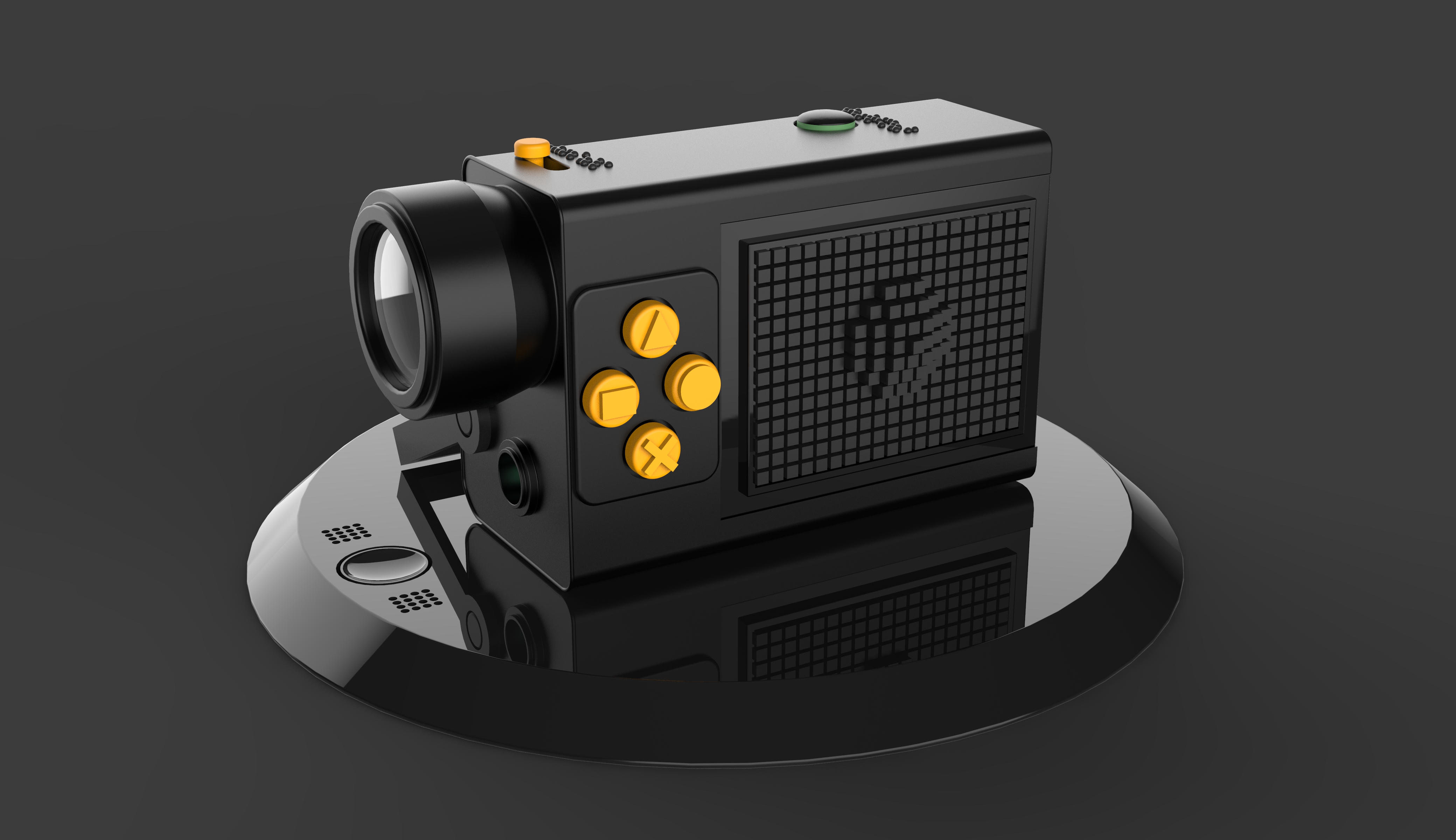
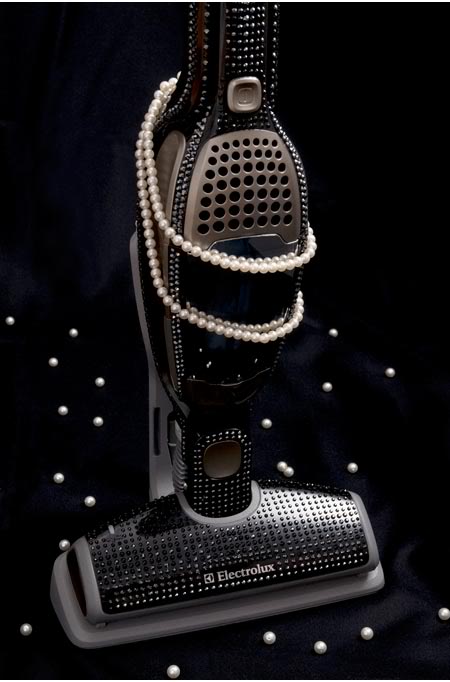
Figure 1 is a camera I designed for the blind people, Mer camera and the name Mer is inspired from the word memory. The design concept of this camera is to hope that it can let the blind people enjoy the happiness of taking photos and share photos as normal people. For this blog I would like to share some ideas that how the functionality and design concept play an important role in the “good taste (Christoforidou et al., 2012)” of products in some way by comparing with my personal work Mer camera and the Ergorapido designed by Łukasz Jemioł (figure 2).
First of all, I would like to give a brief concept of Mer camera. When I designed this camera, I started by analyzing the general reasons why normal people use and own a camera. Generally speaking, there are two reasons. The first one is to record some precious moments in life, or to create some impressive images in the form of photography art. One day in the future the photos can help people recall the scene at that time, or use photos to share their own visual feelings with others. That is the first reason, but another reason to use and own a camera is a little different.
Another reason is some people want to achieve a kind of lifestyle by having a camera in their life. In other word, the functionalities of camera just a small part of the reason why they own a camera, they’re more concerned on what it means to own a camera. It could be a lifestyle of being that loves to travel and live, or it could be people who want to show their concern for the beauty of life. As a conclusion, they purchase cameras to cater for their self-satisfaction. They purchase for the meaning behind the objects. The yoga industry is a good example, As Juliana Luna Mora mentioned in the article “yoga is a multisensory luxury experience, providing consumers with achievement of both tangible and intangible physical, mental and spiritual individual needs and aspirations (Juliana, 2018).”
What’s more, Mer camera is completely focus on the function. More specifically, figure 1 the switch located on the top of the camera, and when you turn on the switch, there will be a slight sound and a shaking as the feedback. The switch is designed move left or right only. It allows the blind people to better understand whether the camera is on or off. Furthermore, The Braille next to the buttons can help blind people understand the function of each button more quickly. For instance, if a blind person just got the new camera, he might want to take a try right away. Then the Braille can help him understand the function of each button immediately without spending a lot of time reading the introduction first. Also, blind people cannot use the icons to locate the key information they want quickly, they may often need to read the instruction from the very beginning to find the information they need. Therefore, giving some key buttons with Braille can save their time to a certain extent. For the blind people, functionality is their main consideration. They also have their own “good taste” for the products, so is this camera a good taste or bad taste for the blind people? Will it feel the same as the “Bling” product we saw? Compared to the Ergorapido, “Electrolux has developed a model of a handheld vacuum cleaner, the Ergorapido, in a limited edition designed by Łukasz Jemioł, whose external shape is the same as the original but it is encrusted with approximately 4,000 Swarovski crystals (Design You Trust, 2011).” In my opinion, the Ergorapido is a very good example of bling product, “Bling is obvious, straight to the point, and easy to recognize. A bling product shouts out its message: bigger is better, more is better, glitzier is better (Christoforidou and Olander , 2009).” So when we want to judge if the Ergorapido is “good taste”, we cannot just focus on its functionality, but from its main concept when it is designed which is obvious, more is better and glitzier is better. It is the same as blind people, in order to figure out if a product meets the “good taste”, we cannot just think of a product from one side, whether from its function or how many diamonds it has. According to Lisbeth Svengren Holm, “Consequently, it is not appropriate to simply express a taste-related opinion; one must also show that the thoughts behind that opinion are adequate to count as an expression of taste. It requires a legitimization to be judged as a competent arbiter (Christoforidou et al., 2012).” And “Referring to Plato, Brunius (1961) states that beauty in objects implies partaking of the truly beautiful, that is, the form or the idea of beauty (Christoforidou et al., 2012).” The meaning behind a product is an important role in its value. Now for Mer camera how much you will value its functions and how much you will value its concept?
REFERENCE
- Christoforidou, D., Olander, E., Warell, A. and Holm, L. (2012). Good Taste vs. Good Design: A Tug of War in the Light of Bling. The Design Journal, 15(2), pp.185-202.
- Christoforidou, D. and Olander, E (2008a). ‘Bling bling and how its message captures our interest – or is bling bling as tasteless as the design elite find it?’ Nordcode 7th Seminar: Paradoxes within Design Research – Mechanisms and Contradictions, Lund, Sweden, 28–30 May 2008.
- Design You Trust (2011). ‘€15,000 haute couture vacuum cleaner’.Design You Trust [online]. Available at: http://designyoutrust.com/2010/07/06/e15000-haute-couture-vacuum-cleaner
- Juliana, M. (2018). THE YOGA INDUSTRY: A CONSCIOUS LUXURY EXPERIENCE IN THE TRANSFORMATION ECONOMY. PhD Candidate and Teaching Associate. Monash University.
 Design Research