Forgotten Superheroes of Design Alison Forbes

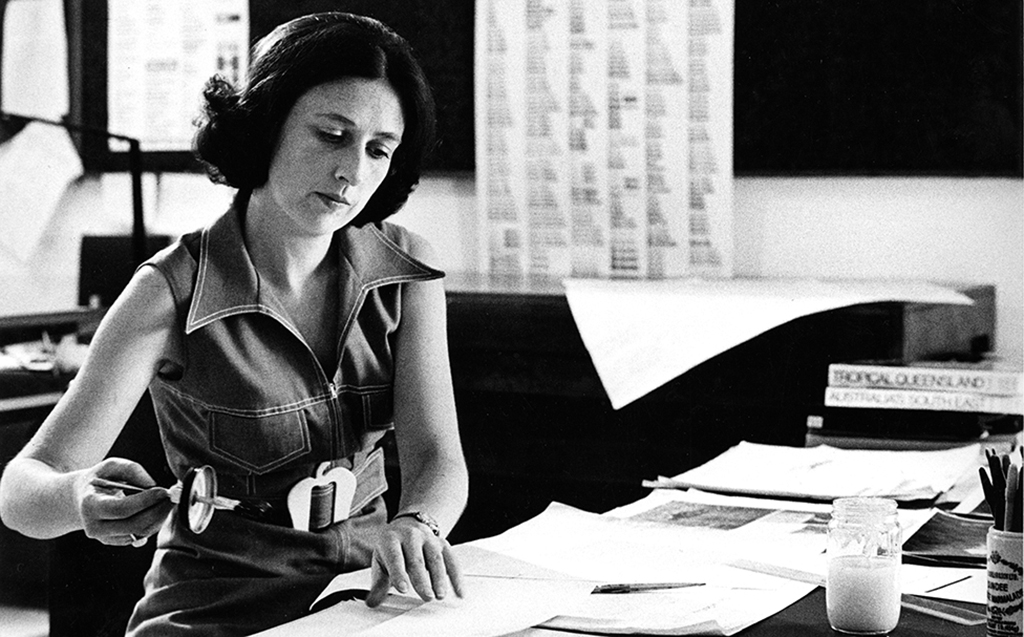
Figure 1. Alison Forbes, photographed by Mark Strizic, 1972

Alison Forbes was one of if not the first full time independent book designers in Australia. She single-handedly changed Australian publishing through her remarkable career. Whilst designing hundreds of well-known titles, her legacy is on display in Australian homes, schools and libraries (Dominic Hofstede, 2016). Forbes’ journey is quite remarkable and she worked as a book designer for many decades, winning almost every award the publishing industry could bestow.

These awards included a special ‘Award of Honour’ given by the Australian Book Publishers Association. Some milestones Alison Forbes has designed include the first edition of Joan Lindsay’s Picnic at the Hanging Rock and Robin Boyd’s The Australian Ugliness.

Figure 2. I Can Jump Puddles, Alison Forbes, 1955

In 1955 , Alison Forbes’ design and illustration for Alan Marshall’s I Can Jump Puddles was acknowledged in the Australian Book Publishers Association Books of the Year. It laid the base for many awards to come through her career.

Focusing on the design for this book, we can notice that Forbes didn’t use any sort of signs or added any mystery towards the title, it was clear and visibly defining. I Can Jump Puddles was about looking through life and exploring reality, like and adventure and her design for this title did it justice. The materials used in her designs were modern for her time and represent classical designs that still hold aesthetic value as of today.

She truly did earn her title in the Hall of Fame by working with, over the years, many Australian publishing’s outstanding figures including Frank Eyre, Max Harris (Sun Books) and Andrew Fabinyi (Cheshire) (Pamela Ruskin, 1976). Forbes’ ideas weren’t expressed through colour or form explicitly as much as they expressed through medium and the image as a whole. Another one of her famous designs was The Land that Waited and the illustration through Forbes’ design certainly explained the direction the book was headed.

Figure 3. The Land that Waited, Alison Forbes, 1967

Through this title, we can see that Forbes didn’t need a variety of colors or certain gimmicks to attract the reader’s eye but the story the image told before the book had opened. In the design for The Land that Waited, her depiction of a fictional world with a mother kangaroo reaching high to nurture her children really did add beauty as well as suspense to the title. In my assessment, even without the modern touch of book designing, this is a title worth reading as the design represents the quality of the content it can hold.

Designing books, Forbes never strayed into commercial graphic design or advertising. Not tempted by the financial rewarding differences or the brighter spotlight that came with it. The result of this singular and directed focus towards her book designs created an everlasting body of work with its unique quality and quantity. This earned her the induction to the Hall of Fame. Forbes was included into the Australian Graphic Design Association’s Hall of Fame in 2016 (Dominic Hofstede, 2016).

Being a part of women of graphic design, Forbes eventually reached global recognition through her designs and sparked more reason and recognition towards the empowerment of women and was a source of motivation for anyone, regardless of gender to add towards the industry of graphic design. 

The argument exists that women with talents to become designers today have barriers existing as obstacles towards their career goals will not be faced by similarly talented men. These are crucial in determining the position of women not only in the designing industry but others as well. The first hurdle is getting enrolled for a degree course and completing it; the second is attaining a job which promises growth and the third is to have the opportunity to work towards success in that job. To encourage women to drift away from femininity isn’t the target but to highlight that the world needs female designing as it will contribute just as equally if not more towards the variety of productivity. As long as questions are raised in favor of the development of women in the industry, there will be susceptibility towards positive change.

In another well recognized book, Forbes gained a lot of recognition not only through her artwork but through being linked with the book’s success. Joan Lindsay’s Picnic at the Hanging Rock was widely considered by critics as one of the best Australian novels. Although the events in the novel were entirely fictional , it was framed as a true story depiction.

Figure 4. Joan Lindsay’s Picnic at the Hanging Rock, Alison Forbes, 1967

This highly reviewed novel later on had reached out to becoming a critically acclaimed film. It boasted huge success not only amongst Australians but readers around the globe. Even though Forbes’ art isn’t as modern as the designs today, it holds immense value and represents that even though design has flourished, true art doesn’t lose aesthetic value with time.

Are designers getting more recognition today?

The question that arises is based off the thought that most popular designs trace back to their relevant creations such as Rob Janoff who designed the Apple Co logo and Lindon Leader who designed the famous FedEx logo through Landor Associates which held a hidden image but with certain designs that don’t reach global recognition or have such an impact in the business world for which the designers aren’t highlighted and never given the recognition or opportunity they worked hard for.  People tend to admire the art that is at display but the backstory of what influenced it and how the designers reached that conclusive product is left within the shade unless specifically displayed. This can add to the value of design as it is given more importance by others if it stimulates emotions of the viewers.

Like Alison Forbes, there are many individual designers that belong to industries that are less financially dominant which have not been given the recognition they deserve which could highlight their work to a greater extent and spark motivation amongst others who pursue the same passion within those industries.

References:

Alison Forbes photographed by Mark Strizic, 1972 from https://www.agda.com.au/inspiration/hall-of-fame/alison-forbes/

Ruskin, Pamela. The Age. June 1976. Recollection Biographies. https://recollection.com.au/biographies/alison-forbes

Bruce, Margaret. and Lewis, Jenny. April 1990. Women designers — is there a gender trap?

Hofstede,Dominic. 2016. HALL OF FAME /ALISON FORBES. https://www.agda.com.au/inspiration/hall-of-fame/alison-forbes/



Yang Metamorfosi

Figure 1. Yang Metamorphosis 2000, Carlotta de Bevilacqua

The highly valuable methacrylate structured table/floor lamp, the Yang is a modern piece of art that visibly demands recognition. Contained within a transparent polycarbonate case, the attention to detail gone to display the functioning of the fluorescent globes is very hard to ignore. Having a spherical design, placing at different inclinations won’t prove to be a worry whilst having a hinge for stability included within the design.

The absolutely stunning lamp boasts ten different functions that mimic colours in the light spectrums for a very stunning effect. In modern times, art has proven to go up in value and people have started to attempt investments in artwork as it is still admired whilst the years pass, on a higher level. Carlotta de Bevilacqua certainly shows with her artwork that women are very relevant within the industry and carries a presence with her flawless design. Today, we do admire art but we don’t go through any lengths to learn about artists and how they are inspired towards what they display. () Women in design go through discrimination and often counter obstacles to excel within the industry whilst being lesser in numbers for graduating and getting the opportunity.

Statistics show that even though women tackle hardships throughout their academic route, even after graduation, result in very less recognition on a larger scale. Yes their designs and art can be successful but their journey isn’t made any easier and the hardships aren’t highlighted within this discriminatory society. The reasons for some prominent leaks within the industry show that women lose motivation as maternal responsibilities fall towards them and that they are paid less when they become mothers (Jane Connory, 2017).

Being one of the women that stood out, Carlotta de Bevilacqua is one of the main representatives of design in modern business with her exemplary vision. Achieving her degree of architecture in 1983 at the Politecnico di Milano, she is the vice president & CEO of Artemide and President of Danese Milano, another widely known brand. 

 Having knowledge within the field of light, Carlotta designed lots of products for Artemide and Danese which earned her invention patents and awards, breaking the stereotype of women not achieving long term career success and standing out in the industry.

The Yang lamp was one of these products and it gives a proper representation to Carlotta’s knowledge and the way she implemented it. From products of Artemide reaching the 2,500 euro price mark, these designs have become a brand that commits to its value and is a known symbol of luxury. It shows that many can exist within one enclosure and if we look at it in such a way, we learn that the industry is there for men and women to co-exist and work towards productivity (Margaret Bruce, 1990).

“Objects, colors, every artwork, every light, everything is linked to our history—everything is a perception of the meaning of our personal life, and also, of course, an aesthetical way of living.” (Sabrina Santos, 2016)  

The highlighting point of such a great designer is the quantity of women who have become known figures in the industry as opposed to male designers. Why have they been invisible for so long? The aim for research gone into this particular question is to highlight contributions made by women in the design industry and shine light on their stories. The Yang Metamorfosi was no exception to exist as a staircase to elevate Carlotta and Artemide within the industry and towards global recognition not only for them but for Italian design and contribution within the design industry.

Rewinding to the image of the Yang table/floor lamp, it can be learnt that remarkable designs can come from anyone who displays hard work regardless of gender and the world may be deprived of such brilliant designs if women and men were given an equal chance to flourish within different industries, not just design.

Displaying science in a way that is impressive and explanatory to the truly shows that art finds a way throughout different aspects of education and reveals a way to make knowledge aesthetically pleasing. Carlotta’s contributions within the industry don’t reach a standstill there as she has been a university professor for the design faculty of the Milan Polytechnic whilst making a number of guest appearances for well-known organizations and educational setups. Carlotta’s competitive mindset shows exceptional function in the blending of humanism and science that aims to set innovation amongst society.

It’s easy to judge the increasing number of female graduates within the design courses, which were almost double of the previous decade’s average as positive. These developments for creating opportunity and equal growth for women did not reflect the same sort of positivity in hiring practices as these had the same statistics as before (Jane Connory, 2017). It is difficult to comment on the reality of this situation with no conclusive data that exists to make a comparison. Some factors did show how women were becoming distant from the industry and their long term careers  Most women do not face the flexibility after they become mothers to return to their work  which proved to be one of the many factors for hindering long term career development amongst them (Jane Connory, 2017). This can be countered by modifying work places to hold centers for babies’ routines and assigning flexible working hours to tailor to their needs. This would be challenging established workplaces where these facilities do not exist and are not thought about where clients expect practicality and success in work at both ends. These decisions are not made easily as women as you tend to lose clients while men at workplaces continue to flourish (Margaret Bruce, 1990).

To sustain your career as a women and mother, the understanding of the system has to be developed while you practice in the industry. Working against the stereotyping of women and creating balance between your life and work duties do tend to spark change in a business with a disruptive way but can still prove to not hinder its success and actually elevate it. 

References:

Figure 1. Carlotta de Bevilacqua, Yang Metamorphosis 2000, Photograph at https://www.ngv.vic.gov.au/essay/designing-women/ 

Connory, Jane. 2017. Plotting the Historical Pipeline of Women in Graphic Design. http://dharn.org.au/dharn2017/plotting-the-historical-pipeline-of-women-in-graphic-design/ 

Bruce, Margaret. and Lewis, Jenny. April 1990. Women designers — is there a gender trap?

Santos, Sabrina. In Residence: Carlotta de Bevilacqua. 5 March, 2016. https://www.archdaily.com/782934/in-residence-carlotta-de-bevilacqua.