Designing Women-Elliat Rich


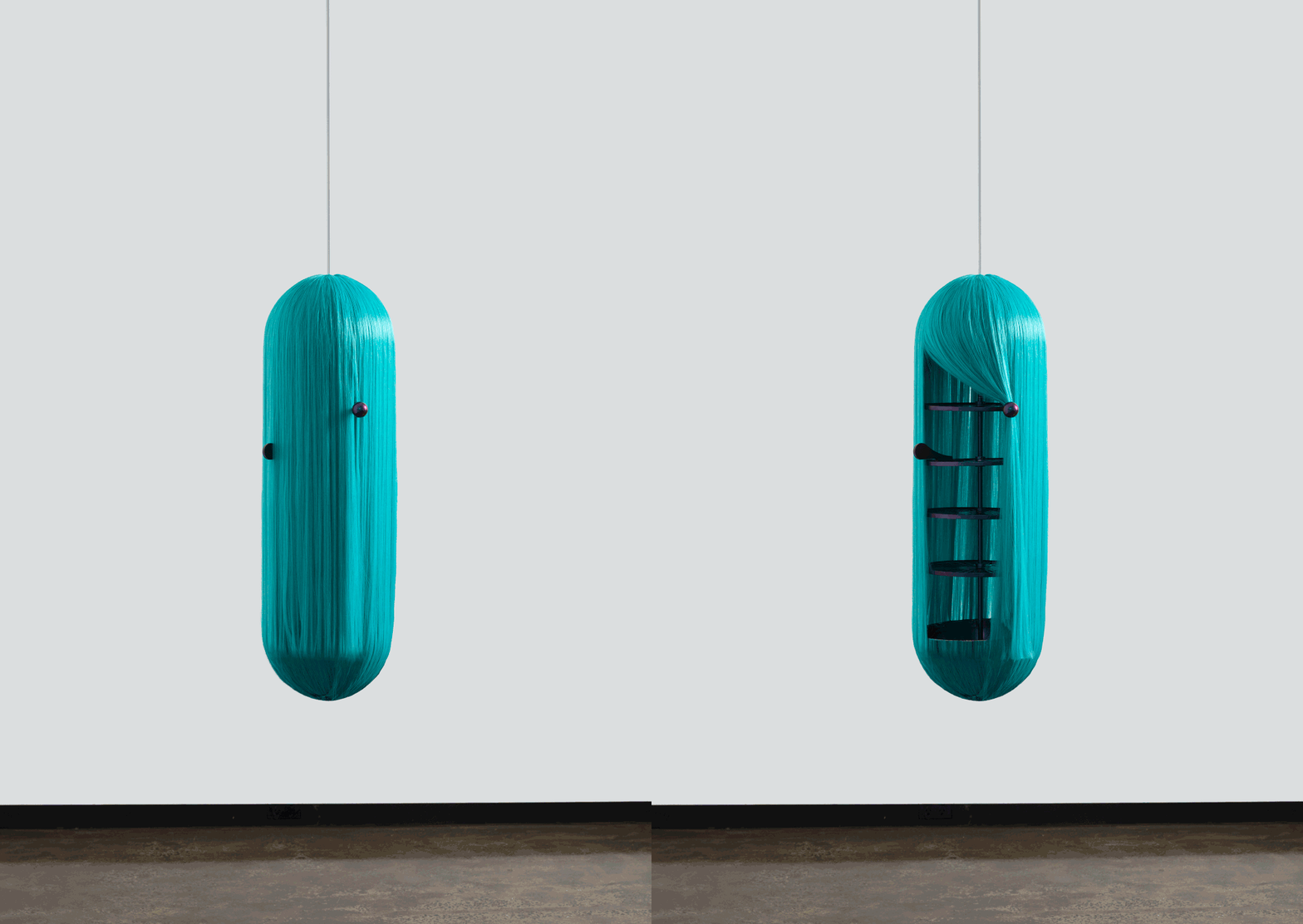
Figure1. Elliat Rich, Weaver, 2018

In the Designing Women NGV International exhibition, many works of contemporary female designers are displayed. The Weaver is a work showed in this exhibition which is designed by Elliat Rich in 2018 (seen figure 1). The Weaver is a cabinet, but it is not look like what we think a cabinet should be. Its colour scheme, appearance and material use are out of ordinary. What Weaver is, however, it is difficult to describe it.

 Weaver is both a cabinet of curiosity and a sculpture in equal measure. In a real sense, Weaver is a cylindrical shelf hanging on the ceiling which is covered with a curtain of synthetic turquoise fibre (Carolan, 2018).. This kind of material which is used for wigs. Inside, four shelves are coated with pearlescent pigments that glow like a rainbow when the light hits them (Carolan, 2018). Elliat Rich boldly used synthetic materials and created a visually striking colour and shape it looks like a pea or a pill. What makes this work more attractive and personalized is a detail contained in it, the curtain “hair” of turquoise synthetic fibre pulled behind the metal “little ear”, just like a lovely girl tucking a wisp of flowing hair behind her ear, which is a charming body action (Carolan, 2018). “It’s really quite intimate [that gesture]. It’s like having this relationship with this sculpture furniture that has a presence and a personality.” Says Rich. The vivid work Weaver which Rich designed invites us to consider the possibilities of brighter, as well as the more hopeful future navigated toward with the aid of design that turn us to the people, places and events that matter to us most. Its characteristics combined with human body perception and products, this work is endowed with personality through a person’s behaviour and actions. It resinates with people. Elliat Rich said that (Domusweb, 2019),

 “This is the beginning of a body of work exploring ways of being in the future, I really feel as designers that we have this amazing opportunity to inspire visions of the future. At the moment there’s this dark, dystopic [idea] that the future is dark and that technology is going to kill us. There are very few beautiful visions of the future that give us [hope] and instructions or a clear vision of where we can go.”

  It is easy to see the futurism in the style of the Weaver, which breaks through the existing design forms and conventions. The Weaver is a challenging design. It is not only a product, but also an art sculpture, if you appreciate it carefully, you will be deeply attracted by one of its characteristics. Although it is an avant-garde or fashionable work, it is controversial when it is considered as an industrial product (Domusweb, 2019). People are subconsciously influenced to consider the functionality or utility of a product or to compare its value with its price. However, in order to meet the public demand, designers usually pursue the simplicity, utilization, functionality and mass production of industrial design products (Slaughter, 2019).

For now, when a product is needed to spend a lot of time and money and might does not necessarily conform to the public aesthetic, designers will consider whether it can be mass produced or it conforms to the public (Jakobsone, 2017). And then people will evaluate whether it is a good industrial design product. For example, when people go to Ikea to buy products, every product you see, you will know at a glance what it is and what its function is. You will buy it because you need a table, a chair or a lamp. The designer will consider the combination of its appearance and function for people to choose and find products easily. In contrast to Weaver, when people see it for the first time without any comments, they even need to observe it and consider what it is. Moreover, not everyone will understand and appreciate the unusual appearance and the detail of design showed on the Weaver. Like if people want to buy a shelf, they often think about the size of its capacity, which means its utility, and the amount of space it takes up, whether it’s appropriate to install it at home. And then they will consider the price, is the price they could effort (Jakobsone, 2017).

 If the feature of the mainstream industrial design products is functional, simple, practical and technological. Whether it can only be regarded as a kind of excellent artwork, rather than an industrial product.

In my opinion, I couldn’t just give one definition of the Weaver which it is a good industrial design or not, or it is just a good sculpture artwork. As I think, Weaver provides a new direction and new thinking way for the future design. This does not mean that it will replace others or intend to change the current definition of a good industrial design products. Designers today, the starting point for their creations is usually to discover a problem, then find the solution, in order to solve the problem to create the product, in simplified words, design is often described as a problem solving activity (Jakobsone, 2017). But for Weaver the designer Rich rather to identify problems which are existing or yet to come, and Rich prefer to ask questions instead of providing answers, for example, although this work is different from the mainstream industrial products-high cost and high time consuming, the designer Rich still creates the Weaver in the process of exploration (Carolan, 2018). And Rich successfully expressed the standpoint in this work-how can people realize that the changed we make now will affect our future life (Carolan, 2018).

  Design is a discipline of divergent thinking. Every designer might has great potential to create new things (Jakobsone, 2017). The reason why I think Weaver can’t be classified is that in the current design education concept the unique Weaver is different from the industrial products. But this difference does not mean forever and the future. It is just a different industrial product in people’s mind now. Maybe in the future, it will become the new direction of design.

Reference

Carolan, Nicholas. From The Red Centre To The Heart, Design That’s Going Places.2018. (accessed 8April, 2019).

Domusweb.it. Australia. A profile of Elliat Rich.2019. https://www.domusweb.it/en/design/2018/08/10/australia-a-profile-of-elliat-rich.html (Accessed 11 Apr. 2019).

Jakobsone, Liene. Critical design as approach to next thinking. 2017. (accessed 8April, 2019).

Slaughter, Anne-Marie. Why Women Still Can’t Have It All. 2019. (accessed 11April, 2019).
Forgotten women designer-Anni Albers

Image result for anni albers tate modern

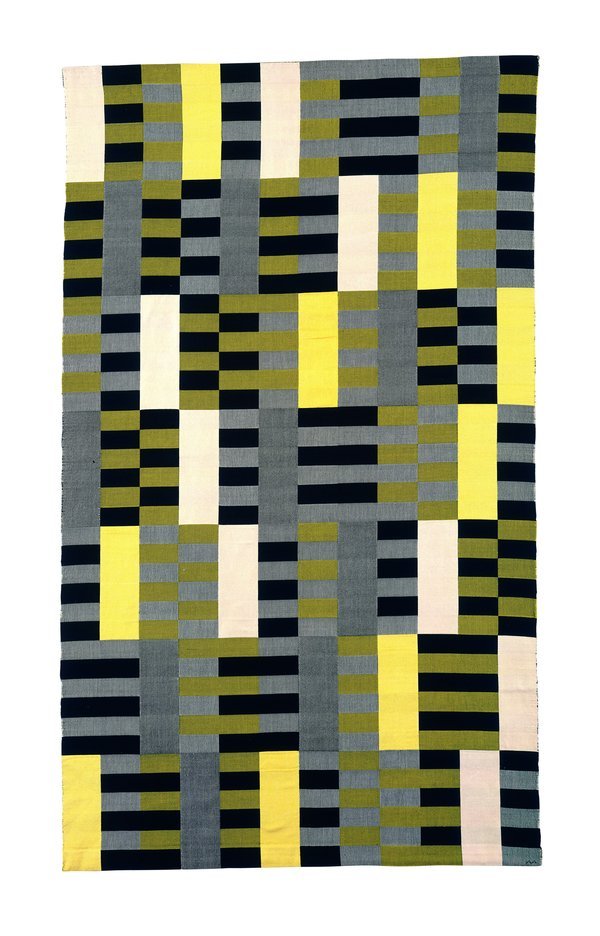
Figure 1, Anni, Albers, Wall Hanging, 1926

   Bauhaus was a German design school established during the second War, it had a profound influence on the development of art, architecture, product design and typesetting field. In 1919, the declaration of Bauhaus design school was that they welcomed everyone without regard to age or sex, there were more women than men applied to it, and Bauhaus offered unprecedented opportunities for women in art education (Lutyens 2018). Walter Gropius the founder of Bauhaus had insisted that he would not discriminate between “the beautiful and the strong sex”, but in fact there were just 6 women among its 45 schoolmasters in the first Bauhaus building in Weima (Reif, 1984). Gropius worried that women may affected the school’s professional reputation with industry, so he subsequently limited the numbers of women permitted access (Lutyens 2018). Bauhaus was not a paradise of equality as what the Gropius said. While the men of Bauhaus are considered today’s design giants, their female counterparts are relatively unknown.

  Anni Albers was a German artist who was born in Berlin id 1899, and she studied at the Bauhaus in 1922. She loved art and design, the reason she took part in Bauhaus is that she agreed with that student and art teachers at the school worked and learnt together(The Art Story, 2019). At that time, women were limited to choose the class, so Albers was discouraged to choose what she hoped to join-the glass workshop, she was directed towards to the weaving workshop. But she still became a pioneering textile designer (The Art Story, 2019).  In 1926, the Bauhaus moved to Dessau, a new focus on production rather than craft prompted Albers to develop many textiles with unique functions, combining light reflection, sound absorption and durability.

  Wall Hanging (seen figure1) 1926 was made while Albers was at the Bauhaus, she used a palette of neutral lines, and focusing on the complex weaving techniques and modern geometric designs. This partly reflects her intention to create designs that could been as a product for industrial mass production (The Art Story, 2019). This pattern is created by combining the repeating and interlocking forms of stripes and blocks. Albers created the triple-weave technique.  Albers once published an essay in 1924, “Bauhaus Weaving” she pointed out that the modern equipment did not completely change the basic weaving grid structure, and the textile weaving was an ancient craft art (Searle 2018). At that time, the mass production of industry and the handmade textile products appeared divergence, they lacked relevance. While the Bauhaus workshop combined technology and craft that became to a solution of the divergence. She praised the hand loom and looked ahead to modern textile production (Searle 2018).

In the work of Wall Hanging, Albers revealed this combination of weaving technique and modernist design (Reif, 1984). In 1931, Anni Albers became the head of the Weaving Workshop, she was one of the fewer women to possess such a senior role at the Bauhaus school (The Art Story, 2019). After the government shut down the Bauhaus, she taught at Black Mountain until 1949. Albers often experimented with different materials in her work, which aim is to allow the students to image what ancient weaving might look like. Albers was a passionate advocate of weaving and design. The concept of what the threads and weaving were had changed since 1922, this was a result of the endeavour by Albers. Although her performance is so outstanding and her contribution on the Weaving still influenced the world. She was not as famous as the male designers of the same period in the Bauhaus, while many men at the Bauhaus are considered design titans tody, their female counterparts are relatively unknown  (Stoppard,2019). Historians and critics of that era were eager to emphasize modernism’s love of architecture and industrial design, often at the expense of other discipline, as a result, many designers who work in textiles, ceramics, set design and interior design are often overlooked (Lutyens 2018).

  In conclusion, many art and design schools established since 1870s, and they were closely combined with industrial demand. While there were opportunities for art education, but women were limited to get the professional jobs. At that time, architecture was considered a male occupation, the craft, embroidery, lace making and weaving were all considered as a suitable area for women. As women, they still haunted by those problem today (Bruce, 1990). By the end of the First World War, women fully participated in the design area. Although there were less theoretical literatures of modern design from women than men, the influence of the development of design by women was huge (Bruce, 1990). It is possible to acknowledge that industrial design is a male-dominated discipline in the professional area. As when women took part in the men-dominated environment, they can not be relaxed. And it is hard to let the women became one of the boys
(Bruce, 1990). The main difference between industrial design and the graphic or crafts design is that for the industrial design people will be required some technical ability while the craft or graphic design does not need. Men are generally considered to be better suited to industrial-related designs, while women are considered to be better suited to art jobs such as graphic arts and artisanal textiles (Bruce, 1990). Like Anni Albers, her contributions to the development of textile technology had huge influence. Although the weaving workshop was not her first choice, she still had great achievements in the textile field. However, when people think of the designers in the Bauhaus, they will firstly think of some female architecture or industrial designers. Women designers who developed in handicraft industry seem to be regard as auxiliary designers and gradually forgotten by people.

References

Lutyens, Diminic. Anni Albers and the forgotten women of the Bauhaus. September 20, 2018.

http://www.bbc.com/culture/story/20180919-anni-albers-and-the-forgotten-women-of-the-bauhaus (accessed 7April, 2019).

The Art Story. Anni Albers Artworks & Famous. 2019

https://www.theartstory.org/artist-albers-anni-artworks.htm (accessed 8April, 2019).

Searle, Adrian. Anni Albers review-ravishing textiles that beg to be touched. October 10, 2018.

https://www.theguardian.com/artanddesign/2018/oct/09/anni-albers-tate-modern-review (accessed11April, 2019).

Stoppard, Lou. Why the fearless women of the Bauhaus are the forgotten trailblazers of art history. January16, 2019. (accessed 11April, 2019).

Reif, Rita. Anni Albers,94, Textile Artist And The Widow of Josef Albers. The New York Times. (May 10,1984). (accessed11April, 2019).

Bruce, Margaret. Lewis, Jenny. Women designers-is there a gender trap. April 1990. P116-118. (accessed 11April, 2019).