Shapes of knowledge1 is a collaborative project combining eight projects from different artists displayed in the MUMA2 at Monash University. It is a response to contemporary art and, “a growing international discourse around pedagogy”3. One of the Berlin – Canberra based artists named Alexa Martinis4 created a work named, “Our Future Network”5, a feminist based video exploring gender roles. The way in which feminist issues are comparative to the wellness industry in a modern sense has interesting parallels and many contradictory themes.
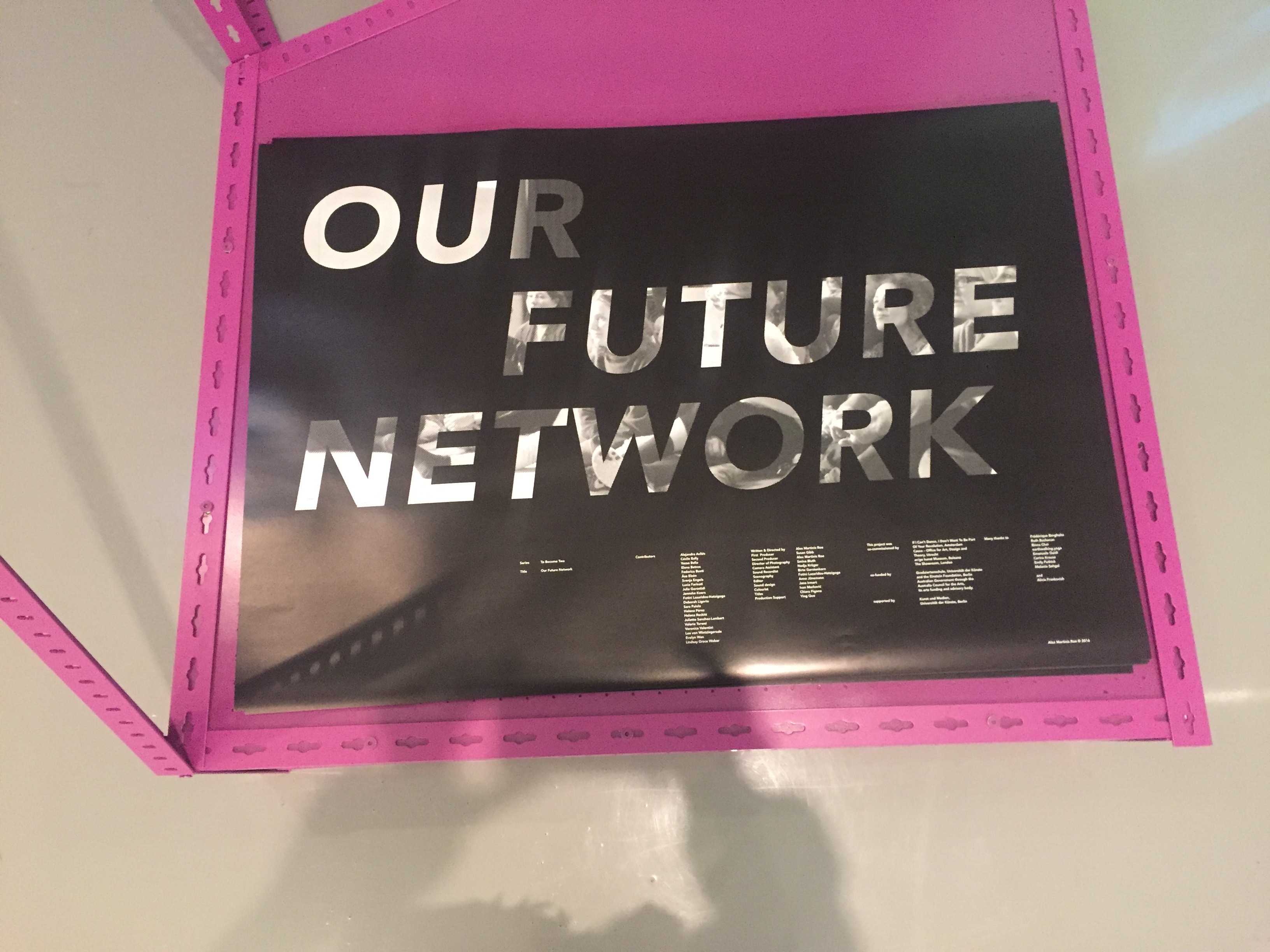
The MUMA museum, in its essence, has a very contemporary yet calming atmosphere. As many of the projects that are shown are research based, there are large quantities of information to be consumed so it provides an optimal learning space. As you walk into the space at the very back of the first room it is a little darker than the rest. The “Our Future Network”6 installation is comprised of a large purple industrial frame containing a screen and a shelf. The screen is constantly playing the content of the video work whilst the shelf holds a black and grey poster, displaying the works title. A variety of different and mismatched chairs have been assembled for the viewer to sit on whilst watching the feature length film. These chairs add a raw value to the experience which match with the very real and confronting subject matter discussed throughout the video. Watching the video is almost meditative and maintains a trance like focus within the viewer.
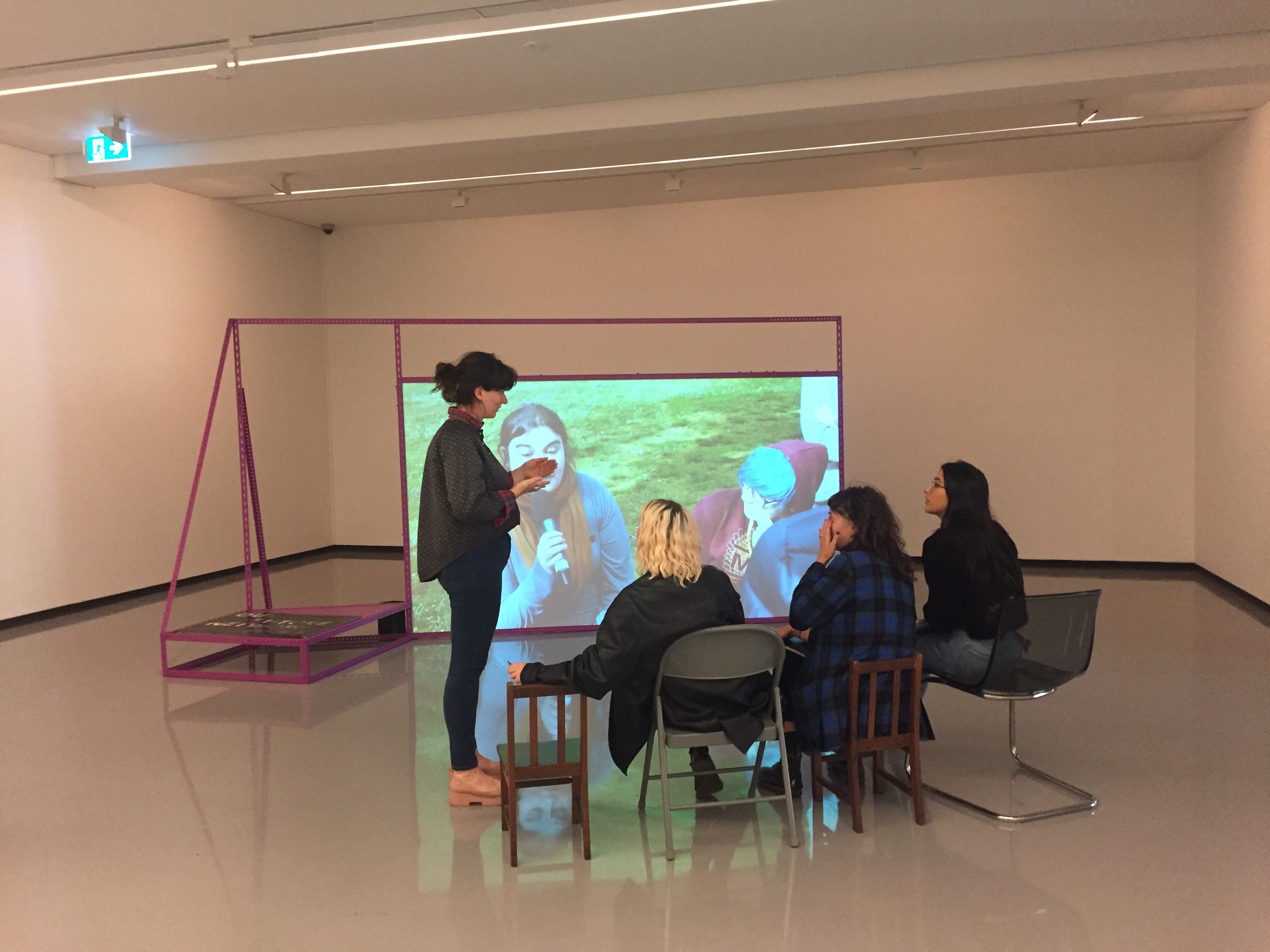
The contents of the film explores gender roles throughout modern everyday lives from a feminist perspective and elaborates on how to overcome certain situations or expectations from the male gaze. The kitchen is referred to as a political space where a female is usually expected to uphold a household lifestyle such as cleaning, cooking and arguing with their spouse. The idea of “living apart together”7, from a female perspective has less freedom as a male typically would be in a heteronormative environment that is still very prevalent today. Language and the gender connotations attached for woman can consist of using phrases like, “i don’t know”, which can be used to degrade their knowledge and power. Giving females confidence through speech in a public and private structure can evoke a stronger sense of identity and reshape the set expectation, which is an example of how the work tackles these feminist conceptual complexities. Identity, language and gender roles are all being presented with a sense of community and woman power collectively as the featured women sit together and chat about the ideas as well as separately reading prepared scripts. It is very raw and real with a variety of ages and cultures coming together.
Themes throughout, “Our future network”8, can be described as a journey to wellness which is relevant in Australian culture today. The wellness industry is one of the largest growing industries in western culture. Yoga is an example of a wellness trend which is both a, “sociocultural phenomenon and a multibillion dollar industry”9 . Yet the modern day wellness concepts are controversial and question the original intentions of becoming a healthier and better version of ones self. Branding and imagery has been obscured into a thin, white, beautiful woman now advertised as the standard for the practice rather than genuine heath and mental benefits. The design and aesthetic qualities seem to trump the classic therapy of the practice. Clothing, yoga mats and other accessories create a massive profit and are seen as an important element of yoga in western society. In conjunction with the wellness industry yoga is worth, “$3.4 trillion US dollars… three times larger than the USD $1 trillion worldwide pharmaceutical industry”10. The experience of a luxurious lifestyle is often associated, attracting a certain class and justifies ones self worth and adds to their social status. In reference (see figure 3) we can see the stereotype displayed. It runs through a theme of not only the beautiful white woman. but includes trends of indoor plants and aesthetic colour scheme. It is aspirational to most which gives an idea behind how these economic ventures thrive. Cultural yoga was traditionally a self journey and it has transformed into a profiting life style brand and a measurement of social status.

Comparatively, the wellness industry in western culture compared to feminist concepts within households and the average woman both aim to create a sense of confidence and self worth. Yet the processes and motivations behind each are starkly opposing. These feminist concepts discussed and role played tackle the involvement of the male gaze and breaking free of oppressive behaviours whether intentional or not. It could be argued that western adaptation of yoga is an, “passive and lateral strategy”11 rather than a, “an active and engrained social, environmental and cultural awareness preposition”12. “Moral dimension”13 can instead, “divide social classes”14. The project displayed could be a reminder of the prevalent social weaknesses that often get overlooked in a consumerist society.
As a society we need to be aware of branding and social cosmetics, as the more informed we are the more we can understand what we are engaging in on a day to day basis and make personal decisions based off that. MUMA Shapes of Knowledge15 exhibition provides a plethora of information especially the project “Our Future Network”16 which provides a feminist approach to identity, belonging and gender roles. The wellness industry instead of being a raw and real approach to self care and health, can conform to an expensive service. Rather than having spiritual and health benefits, we can understand how society can morph even holistic lifestyles into a capitalist gain.
- Shapes of Knowledge exhibition, MUMA Monash, 2019
- Monash University Museum of Art, Building F, Monash University, Caulfield campus, 900 Princes Hwy Service Rd, Caulfield East VIC 3145
- https://www.monash.edu/muma/exhibitions/exhibition-archive/2019/Shapes-of-knowledge
- Alex Martinis Roe, “Our Future Network”, Installation and Poster, MUMA Monash, 2019
- Ibid.
- Ibid.
- Idid.
- Ibid.
- Juliana Luna Moore, “The Yoga Industry: A Conscious Luxury Experience in the transformation Economy”, 1-3, 3
10. Ibid., 4
11. Ibid., 15
12. Ibid., 15
13. Ibid., 22
14. Ibid., 22
15. Monash University Museum of Art
16. Alex Martinis Roe, “Our Future Network”, Installation and Poster, MUMA Monash, 2019
Figure 1; Alex Martinis, “Our Future Network”, Installation, MUMA Monash, 2019
Figure 2; Alex Martinis, “Our Future Network”, Poster, MUMA Monash, 2019
Figure 3; Yoga 231, Stock Image, accessed 8 April 2019, http://www.yoga213.com.au/geelong/whats-on/

 Design Research