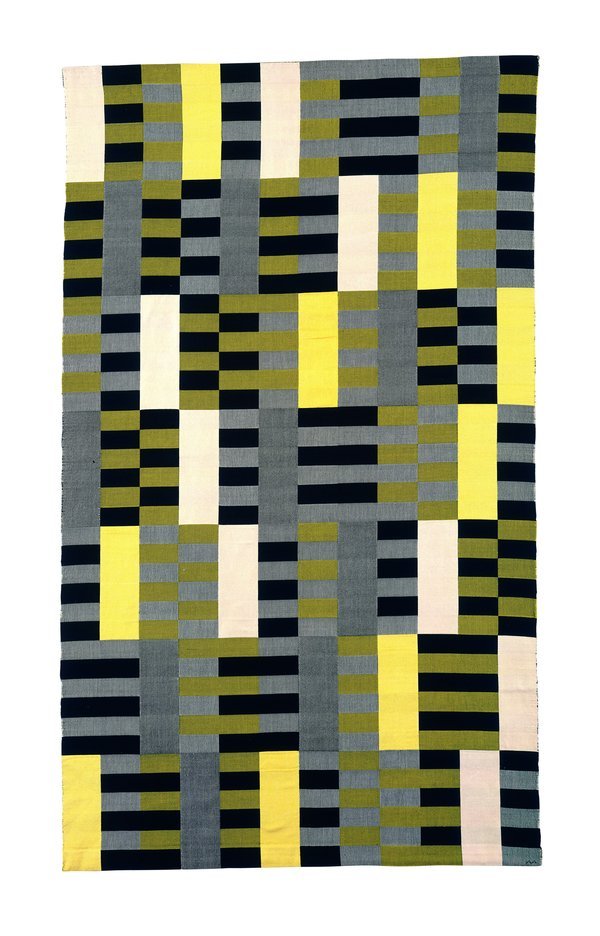
Figure 1, Anni, Albers, Wall Hanging, 1926
Bauhaus was a German design school established during the second War, it had a profound influence on the development of art, architecture, product design and typesetting field. In 1919, the declaration of Bauhaus design school was that they welcomed everyone without regard to age or sex, there were more women than men applied to it, and Bauhaus offered unprecedented opportunities for women in art education (Lutyens 2018). Walter Gropius the founder of Bauhaus had insisted that he would not discriminate between “the beautiful and the strong sex”, but in fact there were just 6 women among its 45 schoolmasters in the first Bauhaus building in Weima (Reif, 1984). Gropius worried that women may affected the school’s professional reputation with industry, so he subsequently limited the numbers of women permitted access (Lutyens 2018). Bauhaus was not a paradise of equality as what the Gropius said. While the men of Bauhaus are considered today’s design giants, their female counterparts are relatively unknown.
Anni Albers was a German artist who was born in Berlin id 1899, and she studied at the Bauhaus in 1922. She loved art and design, the reason she took part in Bauhaus is that she agreed with that student and art teachers at the school worked and learnt together(The Art Story, 2019). At that time, women were limited to choose the class, so Albers was discouraged to choose what she hoped to join-the glass workshop, she was directed towards to the weaving workshop. But she still became a pioneering textile designer (The Art Story, 2019). In 1926, the Bauhaus moved to Dessau, a new focus on production rather than craft prompted Albers to develop many textiles with unique functions, combining light reflection, sound absorption and durability.
Wall Hanging (seen figure1) 1926 was made while Albers was at the Bauhaus, she used a palette of neutral lines, and focusing on the complex weaving techniques and modern geometric designs. This partly reflects her intention to create designs that could been as a product for industrial mass production (The Art Story, 2019). This pattern is created by combining the repeating and interlocking forms of stripes and blocks. Albers created the triple-weave technique. Albers once published an essay in 1924, “Bauhaus Weaving” she pointed out that the modern equipment did not completely change the basic weaving grid structure, and the textile weaving was an ancient craft art (Searle 2018). At that time, the mass production of industry and the handmade textile products appeared divergence, they lacked relevance. While the Bauhaus workshop combined technology and craft that became to a solution of the divergence. She praised the hand loom and looked ahead to modern textile production (Searle 2018).
In the work of Wall Hanging, Albers revealed this combination of weaving technique and modernist design (Reif, 1984). In 1931, Anni Albers became the head of the Weaving Workshop, she was one of the fewer women to possess such a senior role at the Bauhaus school (The Art Story, 2019). After the government shut down the Bauhaus, she taught at Black Mountain until 1949. Albers often experimented with different materials in her work, which aim is to allow the students to image what ancient weaving might look like. Albers was a passionate advocate of weaving and design. The concept of what the threads and weaving were had changed since 1922, this was a result of the endeavour by Albers. Although her performance is so outstanding and her contribution on the Weaving still influenced the world. She was not as famous as the male designers of the same period in the Bauhaus, while many men at the Bauhaus are considered design titans tody, their female counterparts are relatively unknown (Stoppard,2019). Historians and critics of that era were eager to emphasize modernism’s love of architecture and industrial design, often at the expense of other discipline, as a result, many designers who work in textiles, ceramics, set design and interior design are often overlooked (Lutyens 2018).
In conclusion, many art and design schools established since 1870s, and they were closely combined with industrial demand. While there were opportunities for art education, but women were limited to get the professional jobs. At that time, architecture was considered a male occupation, the craft, embroidery, lace making and weaving were all considered as a suitable area for women. As women, they still haunted by those problem today (Bruce, 1990). By the end of the First World War, women fully participated in the design area. Although there were less theoretical literatures of modern design from women than men, the influence of the development of design by women was huge (Bruce, 1990). It is possible to acknowledge that industrial design is a male-dominated discipline in the professional area. As when women took part in the men-dominated environment, they can not be relaxed. And it is hard to let the women became one of the boys
(Bruce, 1990). The main difference between industrial design and the graphic or crafts design is that for the industrial design people will be required some technical ability while the craft or graphic design does not need. Men are generally considered to be better suited to industrial-related designs, while women are considered to be better suited to art jobs such as graphic arts and artisanal textiles (Bruce, 1990). Like Anni Albers, her contributions to the development of textile technology had huge influence. Although the weaving workshop was not her first choice, she still had great achievements in the textile field. However, when people think of the designers in the Bauhaus, they will firstly think of some female architecture or industrial designers. Women designers who developed in handicraft industry seem to be regard as auxiliary designers and gradually forgotten by people.
References
Lutyens, Diminic. Anni Albers and the forgotten women of the Bauhaus. September 20, 2018.
http://www.bbc.com/culture/story/20180919-anni-albers-and-the-forgotten-women-of-the-bauhaus (accessed 7April, 2019).
The Art Story. Anni Albers Artworks & Famous. 2019
https://www.theartstory.org/artist-albers-anni-artworks.htm (accessed 8April, 2019).
Searle, Adrian. Anni Albers review-ravishing textiles that beg to be touched. October 10, 2018.
https://www.theguardian.com/artanddesign/2018/oct/09/anni-albers-tate-modern-review (accessed11April, 2019).
Stoppard, Lou. Why the fearless women of the Bauhaus are the forgotten trailblazers of art history. January16, 2019. (accessed 11April, 2019).
Reif, Rita. Anni Albers,94, Textile Artist And The Widow of Josef Albers. The New York Times. (May 10,1984). (accessed11April, 2019).
Bruce, Margaret. Lewis, Jenny. Women designers-is there a gender trap. April 1990. P116-118. (accessed 11April, 2019).

 Design Research