In the design industry, there have been many talented design practitioners out there with their names not being well-known, especially for women in the design industry. A while ago when the society still had a strong negative view on working women, a lot of female designers found it hard to shine. Today, I am going to talk about the career path of Ruby Lindsay (1885 – 1919), one of the very first female designers and illustrators in Australia back in the day, by referring to women in design and analysing one of her work which is called “Illustration for Punch, title ‘The Ascent of Woman’, by Ruby Lindsay, 31 October, pp. 639,1907” (Figure 2).
Ruby Lindsay pursued a full-time career in magazine and book illustration In the early-20th century. Lindsay was born in a family with five brothers and she was described by one of her brothers, Daryl Lindsay, that she never went anywhere without her notebook and pencils. She created many beautiful work during the Arts and Craft movement, the period when designers focused more on handmade design instead of the mass production of the Industrial Revolution.

Figure 1. Ruby Lindsay, Image downloaded from http://www.normanlindsay.com.au/events/ruby-lindsay-exhibition.php
Even though Ruby Lindsay contributed a lot to the design industry, her name was not that well-known as it should be because of the society at the time. During that period, working women were marginalised. Lindsay also separated herself from the articles with full of discrimination toward women which was said to be very extreme in its Nationalist tone, which marginalised and flouted women (Connory, 2019).
Ruby Lindsay was also overshadowed by her own brothers, Percy Lindsay (1870–1952) and Sir Lionel Lindsay (1874-1961), who also worked in the art and design industry, specialised in cartoons and they got their work published in the Bulletin, an Australian magazine at that time. Norman Lindsay (1879-1969) who was the author and illustrator of The Magic Pudding, and Daryl Lindsay (1889-1976), who was knighted for his services to art in 1963 (Connory, 2019). To separate herself from her famous brothers, she had to change her work name several times, such as ‘Ruby Lyn”, “Ruby Lyne”, or “Ruby Lind”.
In 1907, Lindsay had a chance to show her work at the Melbourne Exhibition Buildings hosted the extraordinary Women’s Work Exhibition. The event was said to draw both royal and international audiences and over 250,000 spectators and exhibited women’s craftwork and patriotism showcasing a distinctly feminine response to the Australia society (Connory, 2019).
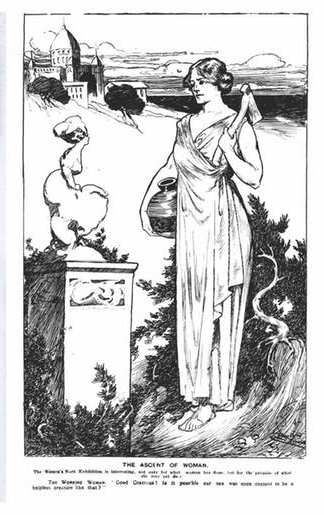
Figure 2. The Ascent of Woman’, by Ruby Lindsay, 31 October, pp. 639,1907
One of Lindsay’s illustrations that appeared in Punch at the time, shown in Figure 2, communicated her will for women to succeed at the exhibition . As shown in the artwork, we can tell from the background that the setting for this work is ancient Greek. The main subject is a woman standing straight while holding an axe and a pot. In the ancient Greek culture, women were not expected to work and be the main income source as the modern days. They were expected to get married, stay home and raise their children and they were only involved in indoor work, such as running household work, wool working and weaving (Cartwright, 2016). Moreover, women could not even attend public assemblies, vote, or hold public office and their names were not to be mentioned in public. They had very few rights for themselves, their lives were mostly controlled by their husband, father or male relative in their life. Based on the information above and compare with Lindsay’s artwork, we can see she was trying to encourage women to contribute more to the society outside of their homes and to demonstrate that women are much more valuable than just domesticated objects (Cartwright, 2016).
In an article called “Plotting the Historical Pipeline of Women in Graphic Design” written by Jane Connory which talks more about their presence in the Australian graphic industry, the amount of female students studying graphic design was higher than male students. Connory did an interview with Lynda Warner, who graduated from Swinburne University in 1973 and found out that she got a very mixed feeling about the design industry. According to Warner, when she started as a graphic designer, the industry was more male dominant. It’s the society and industry’s point of view that made the female designers career much harder. Refer back to Ruby Lindsay’s design career, she became marginal as she was overlooked by the society as a female designer and by her own brothers (Connory, 2017).
Women in design has always been an interesting topic not just in the past but also at the present. In the past, the main reason that held women back was the social perspective on the women’s role. Ruby Lindsay was a talented designer and illustrator but could not shine under such pressure from the society. Today, when people have a much more positive view about the issue, however, there are still a lot of obstacles that hold a lot of women back from pursuing their career. Even though Ruby Lindsay’s career did not make to its prime time, her almost forgotten legacy is very valuable because it created a strong base for the Australian design community.
Reference:
“Ruby Lindsay – The Gentle Illustrator.” Ruby Lindsay – The Gentle Illustrator | Norman Lindsay Gallery & Museum. Accessed April 2, 2019. http://www.normanlindsay.com.au/events/ruby-lindsay-exhibition.php.
Connory, Jane. “Hidden Women of History: Ruby Lindsay, One of Australia’s First Female Graphic Designers.” The Conversation. January 22, 2019. Accessed April 2, 2019. https://theconversation.com/hidden-women-of-history-ruby-lindsay-one-of-australias-first-female-graphic-designers-109184.
Cartwright, Mark. “Women in Ancient Greece.” Ancient History Encyclopedia. July 27, 2016. Accessed April 2, 2019. https://www.ancient.eu/article/927/women-in-ancient-greece/.
Connory, Jane. (2017). Plotting the Historical Pipeline of Women in Graphic Design, p.1-5.

 Design Research